
- urologist
- 0 Comments
Robotic urology surgery is one of the most advanced developments in modern medicine, offering patients a minimally invasive option for treating various urological conditions. By combining the expertise of a skilled urologist with state-of-the-art robotic technology, these procedures provide greater precision, smaller incisions, and faster recovery compared to traditional open surgery.
If you have been advised to undergo robotic urology surgery, understanding the procedure, benefits, and recovery process can help you make an informed decision. Consulting an experienced specialist such as Dr. Shrey Jain, Urologist, can help determine whether robotic surgery is the right treatment option for your condition.
What Is Robotic Urology Surgery?
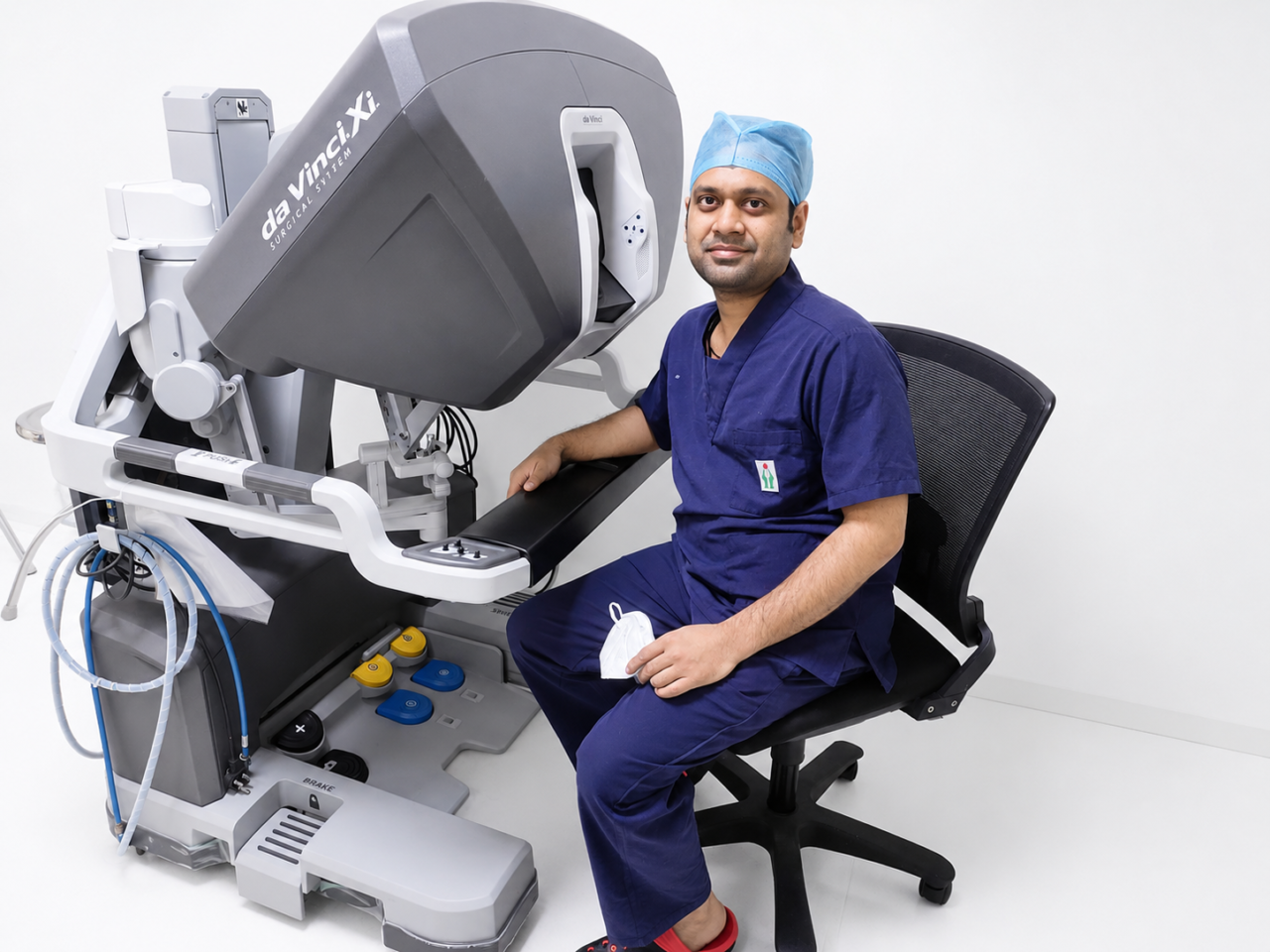
Robotic urology surgery is a minimally invasive surgical technique in which a surgeon controls robotic arms through a sophisticated console. Contrary to common belief, the robot does not perform the surgery independently. Instead, it translates the surgeon’s hand movements into highly precise actions.
The robotic system provides:
- High-definition 3D visualization
- Enhanced surgical precision
- Greater range of motion than the human hand
- Reduced trauma to surrounding tissues
These advantages make robotic surgery particularly useful for delicate urological procedures involving the kidneys, bladder, prostate, and urinary tract.
Conditions Treated with Robotic Urology Surgery
Robotic technology is widely used to treat several urological conditions, including:
1. Prostate Cancer
Robotic-assisted radical prostatectomy is one of the most common robotic urology procedures. It allows precise removal of the prostate while preserving surrounding nerves whenever possible.
2. Kidney Cancer
Robotic partial nephrectomy helps remove kidney tumors while preserving healthy kidney tissue.
3. Bladder Cancer
Patients with bladder cancer may benefit from robotic cystectomy, which involves the removal of the bladder with minimal surgical trauma.
4. Kidney Obstruction
Robotic pyeloplasty is commonly used to correct ureteropelvic junction (UPJ) obstruction and restore normal urine flow.
5. Ureteric Strictures
Robotic reconstructive surgery can repair narrowed ureters and improve urinary function.
How Does Robotic Urology Surgery Work?
During the procedure, the surgeon sits at a computerized console and controls robotic instruments attached to robotic arms. Tiny surgical instruments are inserted through small incisions.
The robotic system offers:
- Magnified 3D views of the surgical area
- Tremor filtration for enhanced accuracy
- Improved dexterity in confined spaces
- Better visualization of critical structures
This technology enables surgeons to perform complex procedures with exceptional precision.
Benefits of Robotic Urology Surgery
Smaller Incisions
Robotic procedures require only small incisions, reducing surgical trauma.
Less Blood Loss
The precision of robotic instruments helps minimize bleeding during surgery.
Reduced Pain
Patients often experience less postoperative discomfort compared to open surgery.
Faster Recovery
Most patients can return to daily activities sooner.
Shorter Hospital Stay
Hospitalization is often significantly reduced.
Lower Risk of Complications
Smaller incisions decrease the risk of infection and wound-related complications.
Better Surgical Precision
The advanced visualization and instrument control help improve surgical outcomes
What to Expect Before Surgery
Before robotic urology surgery, your doctor will conduct:
- Medical history review
- Physical examination
- Blood tests
- Imaging studies such as CT scans or MRI
- Pre-anesthesia evaluation
Patients may be advised to stop certain medications and follow fasting instructions before surgery.
Recovery After Robotic Urology Surgery
Recovery varies depending on the type of procedure performed. However, most patients experience a smoother recovery than with traditional open surgery.
Immediate Recovery
- Monitoring in the recovery room
- Pain management
- Early mobilization
First Few Weeks
- Gradual return to normal activities
- Light walking encouraged
- Follow-up appointments with the surgeon
Long-Term Recovery
Most patients resume routine activities within a few weeks, though complete healing may take longer depending on the procedure.
Is Robotic Urology Surgery Safe?
Yes. Robotic urology surgery is considered safe when performed by a trained and experienced surgeon. The technology has been used worldwide for many years and has demonstrated excellent safety and effectiveness.
Like all surgical procedures, potential risks may include:
- Bleeding
- Infection
- Injury to nearby structures
- Anesthesia-related complications
Your surgeon will discuss these risks based on your individual condition.
Choosing the Right Urologist
The success of robotic surgery depends largely on the surgeon’s expertise and experience. Patients should seek treatment from a qualified robotic urologist who has extensive experience performing advanced robotic procedures.
For personalized evaluation and advanced robotic urological care, patients can consult Dr. Shrey Jain, Urologist, who specializes in modern minimally invasive and robotic surgical techniques for various urological conditions.
Conclusion
Robotic urology surgery has transformed the treatment of complex urological conditions by offering greater precision, reduced pain, faster recovery, and improved patient outcomes. Whether you are dealing with prostate cancer, kidney tumors, bladder conditions, or urinary tract abnormalities, robotic surgery may provide an effective and minimally invasive solution.
Consulting an experienced specialist such as Dr. Shrey Jain, Urologist can help you understand your treatment options and determine the most appropriate surgical approach for your specific condition.
FAQs:
Most patients experience less pain compared to traditional open surgery because the procedure uses smaller incisions.
The duration depends on the type of procedure but generally ranges from 2 to 5 hours.
Many patients can return to light work within 2–4 weeks, depending on the procedure and recovery progress.
Robotic surgery offers enhanced visualization and instrument flexibility, which may improve precision for certain complex procedures.