- urologist
- 0 Comments
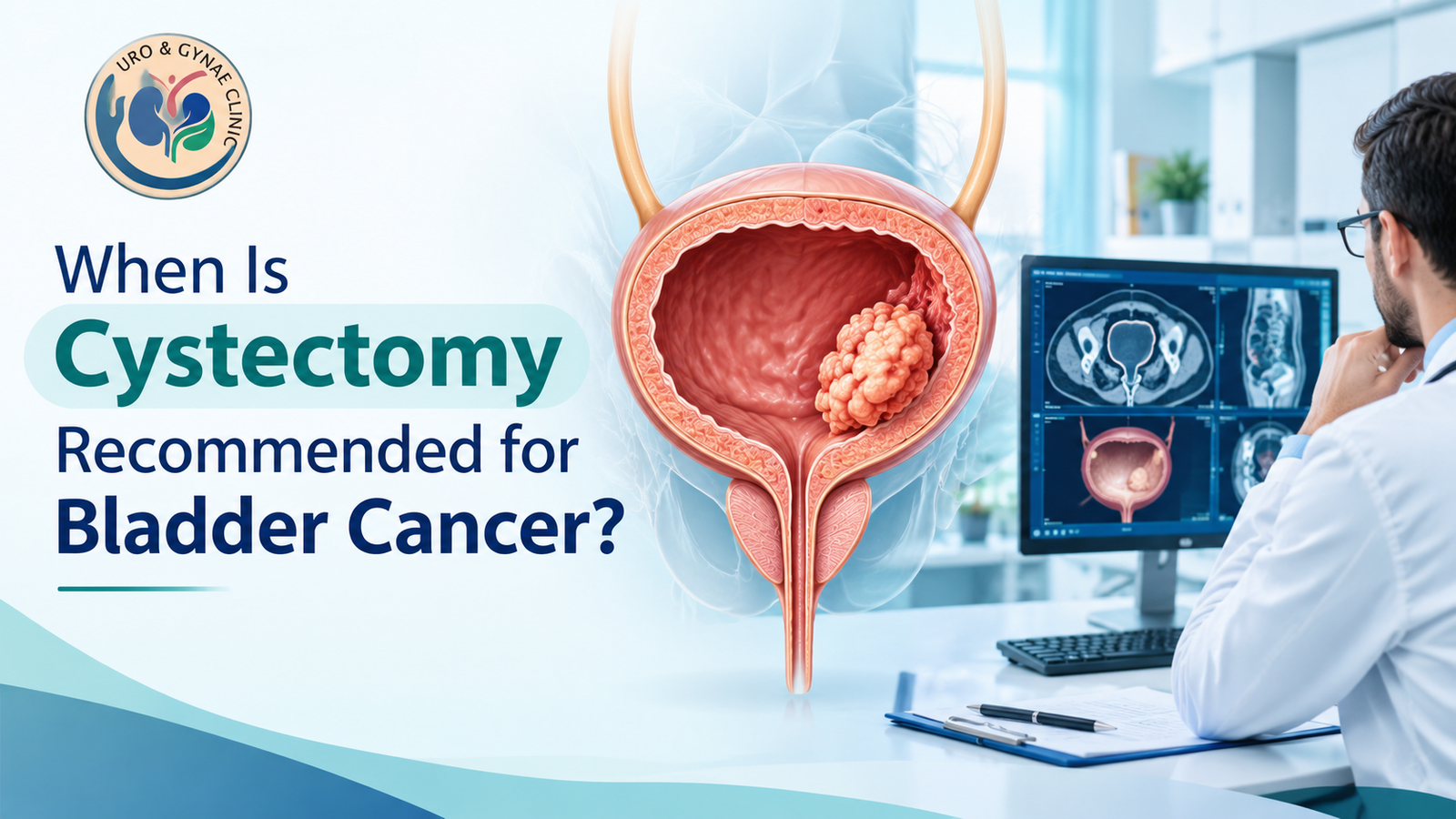
When Is Cystectomy Recommended for Bladder Cancer?
Doctors recommend cystectomy based on the cancer stage, its aggressiveness, the patient’s overall health, and the response to previous treatments. It is not necessary for every patient with bladder cancer.
What Is a Cystectomy?
A cystectomy is a surgical procedure in which part or all of the urinary bladder is removed. It is mainly performed when bladder cancer is aggressive, has invaded deeper layers of the bladder, or has a high risk of returning or spreading.
There are two main types:
- Partial cystectomy: Only the cancerous part of the bladder is removed. It may be considered when the tumour is limited to a specific area and complete removal can be achieved while preserving enough healthy bladder.
- Radical cystectomy: The entire bladder is removed. In men, nearby organs such as the prostate and seminal vesicles may also be removed when required. In women, the extent of surgery depends on the tumour location and spread.
After radical cystectomy, the surgeon creates a new way for urine to leave the body. This is called urinary diversion.
When Is Bladder Removal Surgery Recommended?
The decision for bladder removal surgery depends mainly on the stage and characteristics of the cancer. It is commonly considered in the following situations.
Muscle-Invasive Bladder Cancer
Muscle-invasive bladder cancer has grown into the muscular layer of the bladder wall. Radical cystectomy is one of the main treatment options for patients with operable muscle-invasive disease.
Depending on the individual case, chemotherapy before surgery may also be recommended to treat cancer cells that could have travelled outside the bladder.
High-Risk Non-Muscle-Invasive Cancer
Not every non-muscle-invasive bladder cancer requires cystectomy. Many patients are initially treated with transurethral resection of bladder tumour (TURBT), medicines placed inside the bladder, and regular surveillance.
However, cystectomy may be considered when the cancer is very high-risk, repeatedly returns despite appropriate treatment, or shows features suggesting a higher chance of progressing into muscle-invasive disease.
Cancer That Does Not Respond to Treatment
Some bladder cancers continue to grow or return even after treatments such as TURBT and intravesical therapy. If the cancer becomes difficult to control with bladder-preserving treatment, the medical team may discuss radical cystectomy.
Early consideration can be particularly important when there are signs that delaying definitive treatment could allow the disease to progress.
Tumour Recurrence
Repeated recurrence does not automatically mean that the bladder must be removed. Doctors consider the number, size, grade and location of tumours, how quickly they return and how they responded to previous treatment.
If the cancer repeatedly comes back and becomes increasingly difficult to manage, cystectomy may become an appropriate treatment option.
How Doctors Decide If Cystectomy Is Needed
The decision is not based on one test alone. A urologist and cancer care team generally evaluate several factors.
Cancer Stage and Grade
The stage indicates how deeply the cancer has grown and whether it has spread beyond the bladder. The grade describes how abnormal the cancer cells look and how aggressively they are likely to behave.
Muscle invasion, high-grade disease and other high-risk features can influence the recommendation for surgery.
Tumour Location and Size
The location and size of the tumour can affect whether it can be removed completely while preserving the bladder. Tumours in certain difficult locations or multiple areas may make bladder preservation more challenging.
Number of Tumours
A single small tumour may have different treatment options compared with multiple tumours appearing in different areas of the bladder. The pattern of recurrence is also important.
Overall Health
Cystectomy is a major operation. Doctors therefore assess the patient’s age, general health, kidney function, heart and lung health and ability to undergo major surgery.
The treatment plan should always be personalised rather than based only on age.
What Happens During Radical Cystectomy?
During radical cystectomy, the surgeon removes the bladder and, when necessary, nearby organs or lymph nodes. The exact extent of surgery depends on the patient’s sex, tumour location, cancer stage and other clinical factors.
Because the bladder stores urine, another method of urine drainage must be created.
Common urinary diversion options include:
- Ileal conduit: A small section of intestine is used to create a passage through which urine flows into an external bag.
- Continent urinary diversion: A specially created internal reservoir stores urine and may be emptied using a catheter.
- Neobladder: A section of intestine is shaped into a new bladder-like reservoir, allowing some patients to pass urine through the natural urinary passage.
Not every patient is suitable for every type of urinary diversion. The urologist will discuss the safest and most suitable option.
Can the Bladder Be Saved?
Yes, in selected patients. Cystectomy is not necessary for every bladder cancer patient.
For certain non-muscle-invasive cancers, treatments such as TURBT followed by intravesical therapy and regular cystoscopy may be used. Some selected muscle-invasive cases may also be considered for bladder-preserving treatment using a combination of tumour removal, chemotherapy and radiation.
However, bladder preservation is not suitable for everyone. The cancer’s stage, location, number of tumours, bladder function and response to treatment all matter.
Patients should discuss both bladder-preserving and surgical options with an experienced urologist before making a decision.
Recovery After Cystectomy
Recovery after bladder removal is different for every patient. Because cystectomy is a major operation, hospitalisation and a period of recovery are generally required.
Patients may need time to adjust to their urinary diversion. If an external urinary bag is used, a healthcare professional can teach the patient how to care for the stoma and manage the appliance.
With a neobladder or another internal urinary diversion, patients may require additional training and follow-up to understand how to empty the new urinary reservoir.
Regular follow-up is important after treatment to monitor recovery and check for any evidence of cancer recurrence.
Is Cystectomy the Same for Every Patient?
No. The surgical approach and treatment plan can vary significantly from one patient to another.
Doctors may use open, laparoscopic or robotic-assisted techniques depending on the patient’s condition, the surgeon’s expertise and the available facilities. The choice of urinary diversion also varies.
Before surgery, patients should ask about the expected benefits, possible complications, recovery time and available urinary diversion options.
For patients looking for detailed information about kidney and urinary tract cancer treatment, this related resource can also be added as an internal link while publishing the article.
Important Questions to Ask Your Urologist
Before deciding on cystectomy, patients can ask:
- What is the exact stage and grade of my bladder cancer?
- Has the cancer reached the bladder muscle?
- Can my bladder be safely preserved?
- What are the benefits and risks of cystectomy in my case?
- Will I need chemotherapy or radiation?
- Which urinary diversion would be suitable for me?
- How long could recovery take?
- What follow-up will be required after surgery?
Getting answers to these questions can help patients understand their treatment options and make an informed decision.
Conclusion
When Is Cystectomy Recommended for Bladder Cancer? There is no single answer for every patient. Cystectomy is generally considered when bladder cancer is muscle-invasive, very high-risk, repeatedly recurring, or not responding adequately to bladder-preserving treatment. However, selected patients may be able to keep their bladder with appropriate treatment and close monitoring.
The most suitable treatment depends on the cancer stage, grade, tumour characteristics, overall health and previous treatment response. A qualified urologist and oncology team can assess these factors and recommend the safest treatment approach. Early diagnosis, proper staging and timely treatment can play an important role in achieving better cancer control.